
Setting up a mini dairy processing plant requires careful planning of capacity, product mix, process flow, equipment, utilities, plant layout and food safety. This infographic provides a step-by-step overview for dairy entrepreneurs planning a small-scale dairy processing project.
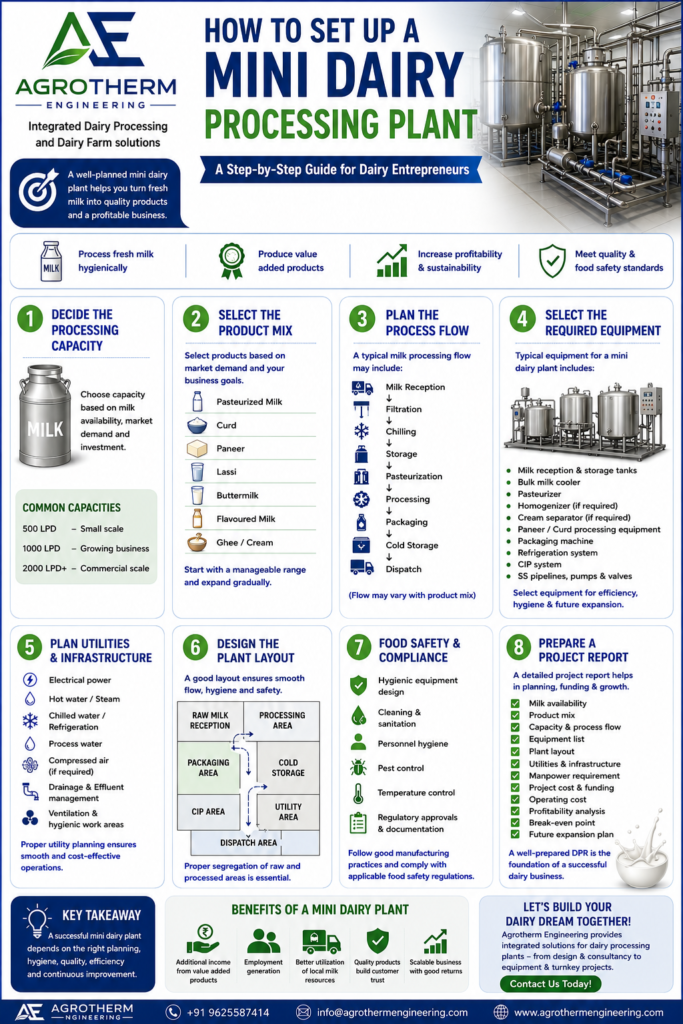
How to Set Up a Mini Dairy Processing Plant
Introduction
With the right capacity, equipment, product mix and hygienic plant design, a mini dairy plant can support products such as pasteurized milk, curd, paneer, lassi and buttermilk.
This guide explains the key factors to consider when planning a mini dairy processing plant.
1. Decide the Processing Capacity
The first step is to determine how much milk you plan to process each day.
Common capacities for small dairy projects include:
- 500 LPD – suitable for small-scale dairy businesses
- 1000 LPD – suitable for growing dairy entrepreneurs
- 2000 LPD and above – suitable for larger commercial operations
The capacity should be selected based on milk availability, expected market demand, product mix, investment capacity and future expansion plans.
2. Select the Product Mix
A suitable product mix can improve the profitability of a dairy processing business.
Depending on the target market, a mini dairy plant can produce:
- Pasteurized pouch milk
- Curd
- Paneer
- Lassi
- Buttermilk
- Flavoured milk
- Cream
- Ghee
For a new entrepreneur, it is generally better to start with a manageable product range and gradually expand as the market develops.
3. Plan the Dairy Processing Flow
A typical milk processing flow may include:
Milk Reception → Filtration → Chilling → Storage → Pasteurization → Processing → Packaging → Cold Storage → Dispatch
The actual process flow will depend on the products being manufactured.
For example, paneer production requires additional steps such as heating, coagulation, whey separation, pressing, cooling and packing.
4. Select the Required Equipment
The equipment requirement depends on the capacity and product mix.
Typical equipment for a mini dairy plant may include:
- Milk reception tank
- Milk storage tank
- Bulk milk cooler
- Milk transfer pump
- Plate heat exchanger
- Pasteurizer
- Homogenizer, where required
- Cream separator, where required
- Curd incubation tank
- Paneer processing equipment
- Packaging machine
- Refrigeration system
- CIP system
- SS milk pipelines and valves
Equipment should be selected based on processing capacity, product requirements, hygiene standards, automation level and future expansion.
5. Plan Utilities and Infrastructure
A dairy plant requires properly planned utilities for efficient operation.
Important utilities include:
- Electrical power
- Hot water or steam
- Chilled water/refrigeration
- Process water
- Compressed air, where required
- Drainage and effluent management
- Ventilation and hygienic working areas
Utility sizing should be carried out along with the process design rather than after the equipment has been selected.
6. Design the Plant Layout
A good dairy plant layout should provide a logical product flow and minimize unnecessary movement of materials and personnel.
The layout should consider:
- Raw milk reception area
- Processing area
- Packaging area
- Cold storage
- Finished product dispatch
- Utility area
- CIP area
- Staff facilities
- Cleaning and drainage arrangements
Proper segregation of raw and processed product areas is important for maintaining hygiene and reducing the risk of contamination.
7. Consider Food Safety and Compliance
A dairy processing plant should be designed with appropriate hygienic practices and applicable food safety requirements in mind.
The plant design should consider:
- Hygienic equipment design
- Food-grade contact surfaces
- Cleaning and sanitation
- Personnel hygiene
- Pest control
- Proper drainage
- Temperature control
- Product traceability
- Applicable regulatory requirements
Before starting commercial production, the entrepreneur should ensure that the required registrations, licenses and approvals are obtained.
8. Prepare a Project Report
Before investing in the plant, it is useful to prepare a detailed project report covering:
- Milk availability
- Product mix
- Processing capacity
- Equipment list
- Plant layout
- Utility requirements
- Manpower
- Capital investment
- Operating expenses
- Production cost
- Sales projections
- Profitability
- Break-even analysis
- Expansion plan
A properly prepared project report helps the entrepreneur understand the investment requirements and evaluate the commercial feasibility of the project.
Conclusion
Setting up a mini dairy processing plant requires more than simply purchasing dairy equipment. Process design, product selection, equipment sizing, utilities, plant layout, hygiene, compliance and financial planning must work together.
A well-designed plant can provide a strong foundation for producing quality dairy products and expanding the business as market demand grows.
Planning to set up a mini dairy processing plant?
Agrotherm Engineering provides integrated solutions for dairy processing projects, including plant design, technical consultancy, equipment solutions, manufacturing and turnkey project support.